What is an AI agent?
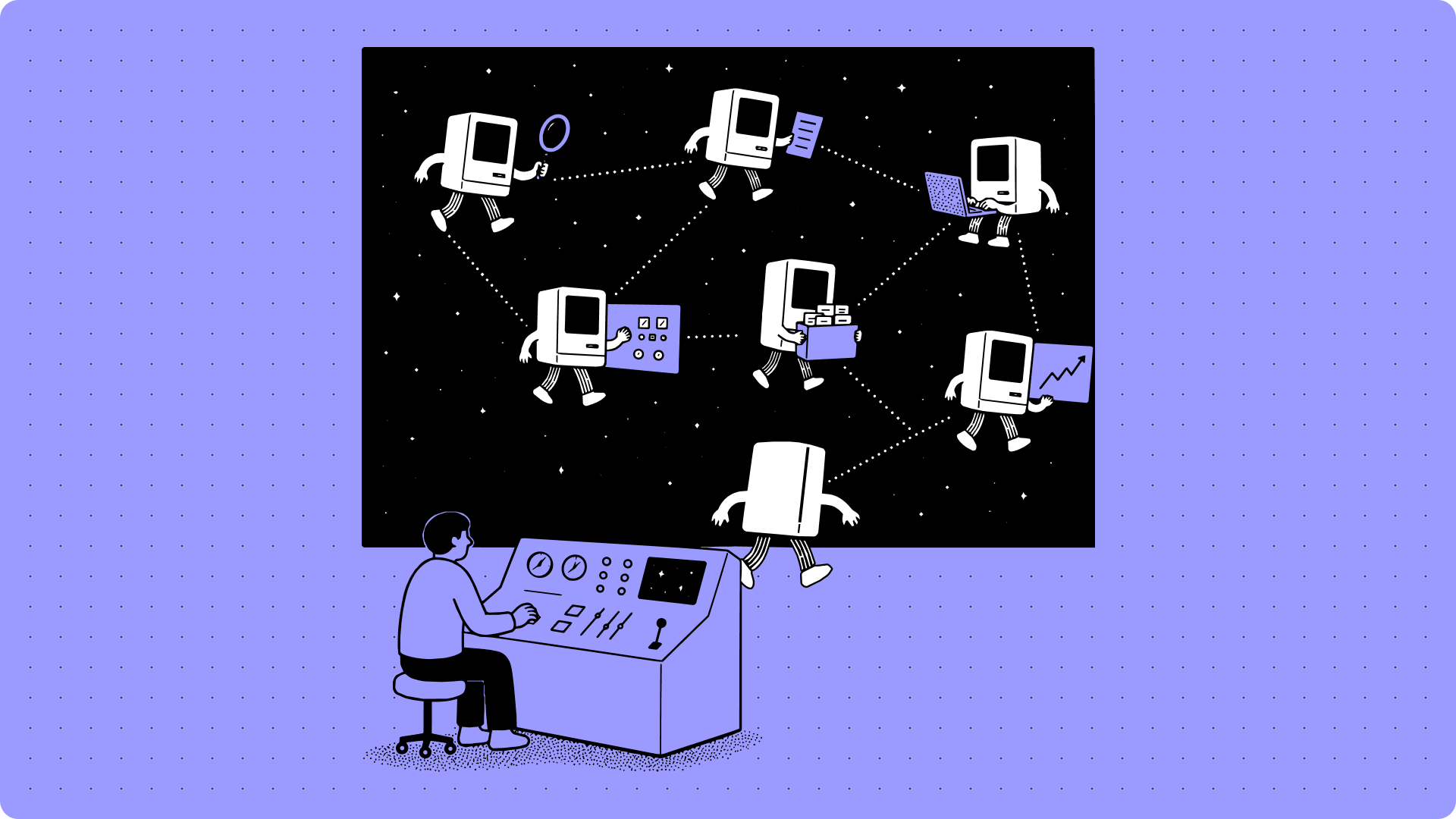
An AI agent is a system that can pursue an objective autonomously.
Instead of responding to a single prompt, an agent can plan tasks, gather information, use tools, and adjust its behaviour as it progresses toward a defined goal.
Researchers often describe the basic loop of an agent as something like:
Goal → Plan → Act → Evaluate → Adjust
In other words, the agent behaves less like a calculator and more like a junior operator working toward an outcome.
A simple example might be a system tasked with researching potential suppliers for a product line. Instead of waiting for prompts, the agent might:
- search the web for suppliers
- collect product specifications
- compare pricing
- analyse delivery lead times
- compile a report
All without step-by-step instructions from a human.
In practice the agent still depends heavily on AI models such as large language models, but it also uses additional components — memory, planning logic, and external tools.
The result is something closer to a software worker than a traditional application.
Agents are moving from research to reality
For several years the idea of autonomous agents was largely theoretical. Recently that has changed.
Many of the major AI platforms now support agent frameworks directly. OpenAI, Anthropic, Google and others are actively building infrastructure for systems that can plan tasks and use tools.
OpenAI's Assistants and Agents frameworks, for example, allow models to call external tools, write and execute code, retrieve information, and manage multi-step workflows.
Meanwhile, open-source ecosystems such as LangChain and AutoGPT have experimented with autonomous agent systems capable of pursuing longer sequences of tasks.
The technology is still developing, but the direction is clear — AI is evolving from tools to actors.
The difference between tools and agents
This shift might sound subtle, but it has significant implications.
Traditional software tools wait for instructions — agents work toward objectives.
A spreadsheet performs calculations when someone enters data. A CRM records interactions when someone logs a conversation. These tools extend human capability, but they still depend on human initiation.
Agents introduce a new layer — they operate continuously within defined boundaries, carrying out work on behalf of people.
In practice this might mean agents that:
- monitor inventory levels and automatically reorder stock
- analyse customer behaviour and generate campaign suggestions
- review contracts and highlight risk areas
- coordinate logistics updates across systems
Many organisations already perform these activities through complex workflows and manual coordination. Agents have the potential to compress much of that coordination into autonomous processes.
But they introduce an important question. Who decides how the agent behaves?