Why computational thinking matters for AI
AI systems are incredibly good at executing tasks once the structure of a problem is clear. They are far less reliable at determining what the structure should be. In other words, AI excels at skills. Humans still define the rules of the system.
Computational thinking is the bridge between those two layers.
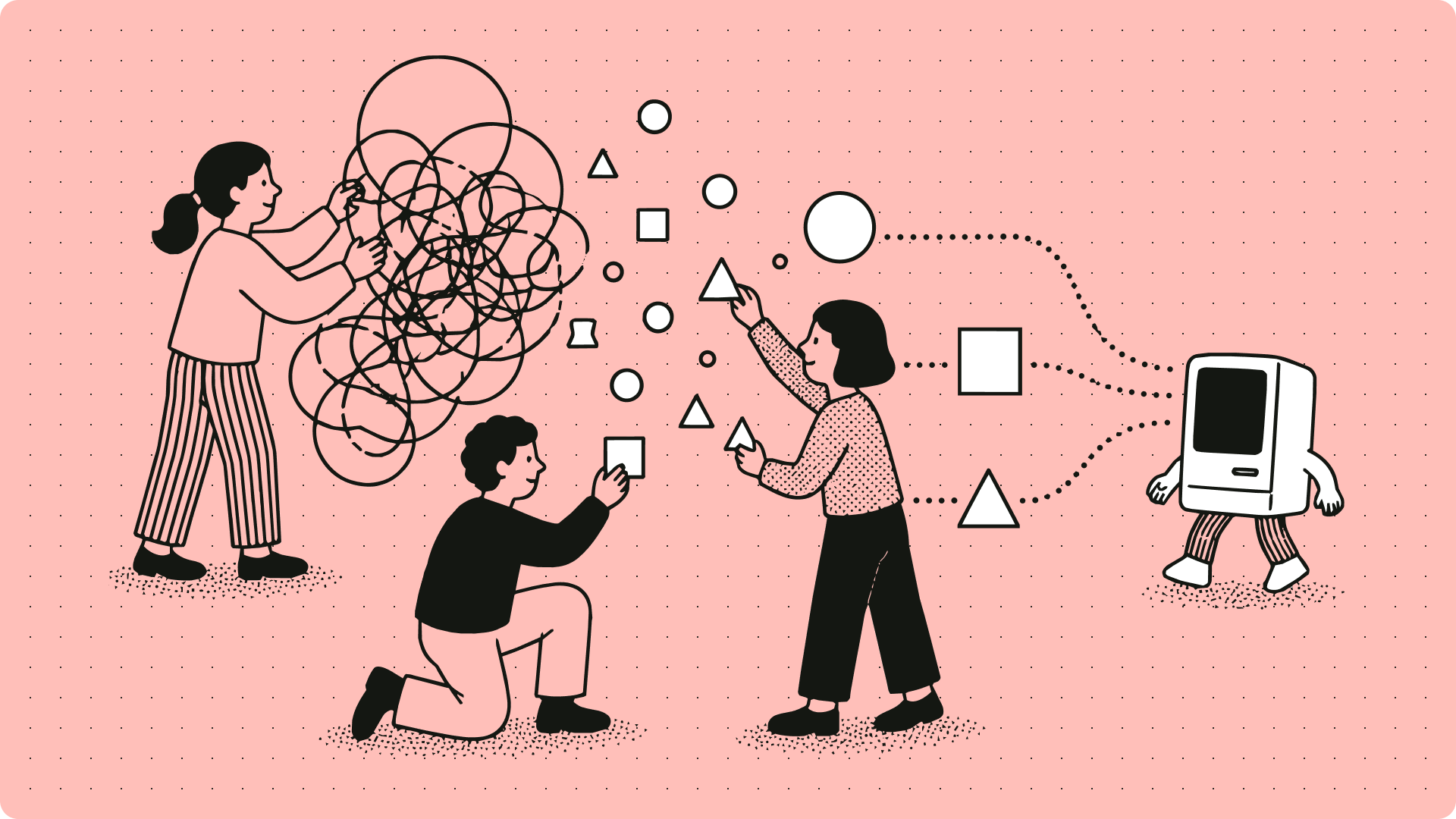
It allows a human to translate a messy real-world situation into a structured logic that an AI system can execute. In the context of agents, that structured logic becomes the blueprint for how the agent behaves.
An applied example: a purchase order agent
Consider a simplified operational problem.
A company wants to automate the handling of purchase orders.
The goal is straightforward: once a purchase order is created, the system should ensure the order is confirmed, production is tracked, and delivery updates are recorded. A human operator might currently handle this process manually by sending emails, checking spreadsheets, and updating systems.
Computational thinking begins by decomposing the process. Instead of viewing it as a single task, it becomes a sequence of steps:
● Detect when a new purchase order is created
● Identify the supplier responsible for the order
● Send a confirmation request to the supplier
● Wait for a confirmation response
● Record production and shipping updates
● Flag delays if timelines slip
At this point the structure of the problem begins to resemble an algorithm.
But judgement is still required.
For example:
● What counts as a confirmation?
● How long should the system wait before escalating?
● What happens if the supplier does not respond?
These decisions are not technical - they require an understanding of how the business operates. Once those decisions are made, the algorithm becomes clearer.
The agent might operate according to logic like this:
IF purchase order created → identify supplier → send confirmation request → wait 48 hours
IF confirmation received → update order status
IF no confirmation after 48 hours → send reminder
IF no confirmation after 96 hours → notify operations team
The AI system can now execute this structure reliably. But the structure itself came from human judgement.
The Human Role in the Agent Era
This example illustrates a broader point. Designing AI agents is not primarily about writing code - it is about understanding systems.
Someone needs to decide:
● what the goal of the system should be
● how information should flow through the process
● where risks exist
● when humans should intervene
These are conceptual design questions. They require domain knowledge, contextual understanding, and judgement. The AI simply executes the structure.
From operators to system designers
Historically many knowledge workers acted as operators. They gathered information, processed it, and passed it along.
As AI systems become capable of performing more of those activities, the human role shifts upward. Instead of executing tasks, humans increasingly design the systems that perform those tasks.
This is not a small change - it represents a fundamental redefinition of knowledge work. People move from being the mechanism of the process to being the architects of the process.
The future of work might look like this
The arrival of powerful AI systems does not eliminate the need for human intelligence - it changes where that intelligence is applied.
Machines increasingly perform the execution layer of work. Humans increasingly design the logic that governs those systems. In that sense the future workplace may not revolve around who performs the most tasks.
Instead, it may revolve around who designs the most effective systems.
And that brings us back to the central idea - as skills become automated, judgement becomes the human layer that defines intent, checks reality, and inspires the creative leaps.
References
Wing, J. M. (2006). Computational thinking. Communications of the ACM, 49(3), 33-35.
Wing, J. M. (n.d.). Selected publications and overview page. Available at: https://www.cs.cmu.edu/~wing/