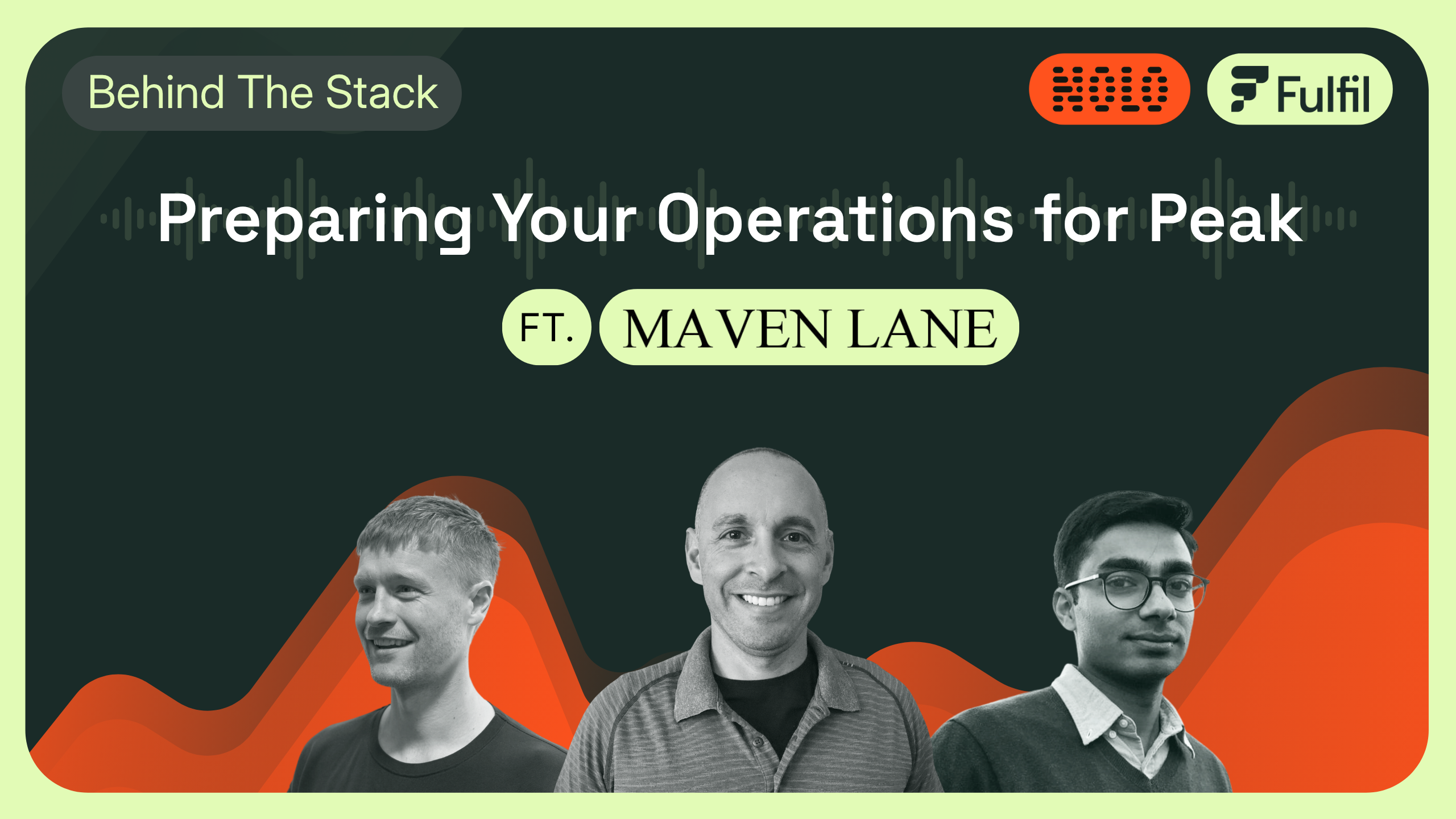
Behind the Stack is a limited series that Olly records with the team at Fulfil, going deeper into e-commerce operations than most conversations tend to reach. Will Andrews is the guest for this episode, and he covers a lot of ground.
5S, and why it's harder than it looks
5S is a lean methodology most people have heard of but few have done well. Will always starts here, regardless of scale, aiming to work through the first 2 stages before building from there.
The reason it works is also the reason most people underestimate it. When everything has a place, "out of standard" becomes visible without anyone having to say it. Will uses the airport as his example: you land at O'Hare in the international terminal, miles from baggage claim, and you still find your way. You might not even speak the language. The signs do the work. Nobody needs to tell you what to do.
That's what 5S builds. A visual environment where the standard is understood and deviation is immediately obvious. Leaders don't need to be everywhere once it's in place. The floor starts to run itself.
Build flow from actuals
The other thread worth following closely is flow planning. Will's approach: you can only build throughput from what your team is actually doing. Goals are a distraction until you know the actuals.
In almost every operation he's walked into, leaders could tell him the pick rate target. Almost none could tell him the real number. So the first step is always finding the actual, then finding where the friction sits. At Grunt Style the hidden bottleneck was bin transfers: pushing picks faster just created a longer replenishment queue downstream. Nobody had named bin transfers as the constraint because the pressure was always on picking. When they fixed it, daily shipment volume went from 12,000 packages at peak to 24,000, with an average order-to-ship time of 12 hours. That's what understanding where the friction live can produce.
Why a whiteboard beats a dashboard at floor level
Most ops leaders Will works with want a digital dashboard. He wants a whiteboard, a green pen, a red pen, and the lowest tier of leadership writing the numbers up every 2 to 3 hours.
The reasoning: engagement with operational data at floor level is a behaviour design problem. When the people closest to the work are the ones putting the numbers up, they start to understand what the numbers mean. They feel when something's drifting before it becomes a crisis. Will calls this operational synergy: the point at which the team running the floor understands it well enough to make adjustments themselves, without waiting to be told.
Every team has their own 'floor'
Will applied it to every function he touched at Grunt Style. The customer service team went from 40 agents down to 15 as the operational improvements upstream reduced the volume of "where's my order?" calls. When orders ship correctly and on time, fewer customers need to ask what happened to theirs. He applied visual management to the design team: project status tracked on a whiteboard, stages mapped, late items marked in red.
Every time, the outcome was the same. When people have the information they need and a clear picture of the standard, they hold themselves to it. The warehouse is just where Will chose to start.


.png)