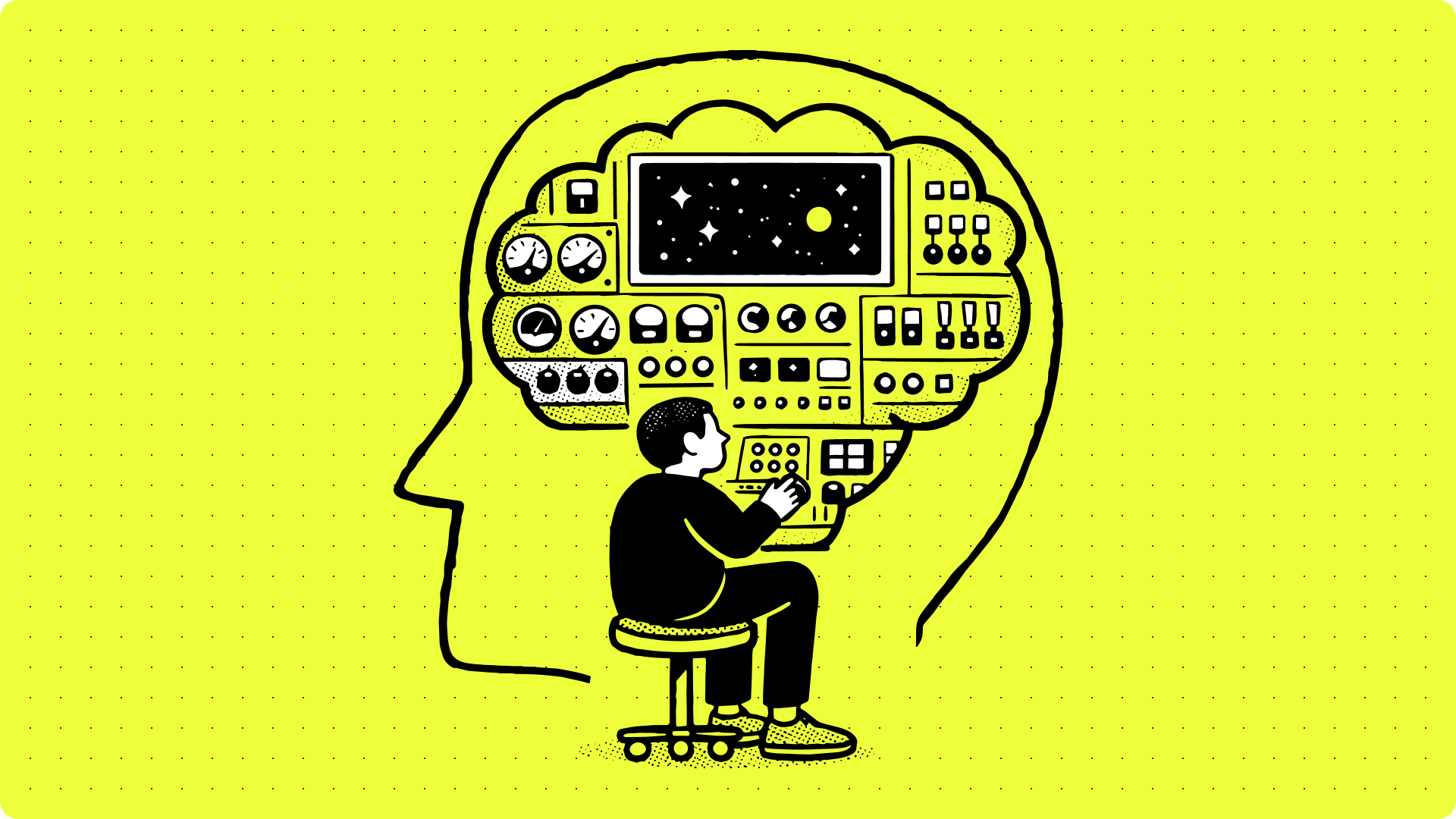
If AI is doing all the work, what are humans doing?
Something is happening to knowledge work.
Calculate. Design. Write. Analyse. Execute.
These activities once defined expertise. Organisations depended on people who could perform complex tasks with skill and reliability.
Now powerful AI systems can complete many of those tasks in seconds. Work that only a few years ago required hours of focused effort can now be produced almost instantly.
The increasing presence of AI in everyday work is quietly shifting the fundamental value - and meaning - of what we do. The change is subtle, but it is beginning to ripple through organisations everywhere.
Which raises an interesting question:
If AI is doing the work, what exactly are humans meant to do?
The emerging answer is both simple and profound: humans provide judgement.
Skill and judgement are not the same thing
For a long time, professional expertise bundled two things together: skill and judgement.
Skill is the execution layer of work. It includes activities such as analysing data, drafting reports, modelling scenarios, generating designs, and synthesising information. These tasks often involve complex reasoning, but they follow patterns. With enough examples and enough computing power, machines can learn to reproduce them.
This is precisely what modern AI systems excel at. Large language models and other machine learning systems process enormous volumes of data, identify patterns, and generate structured outputs at remarkable speed. Tasks that once required trained specialists can now often be performed by machines with impressive competence.
Judgement, however, is something different.
Sir Andrew Likierman of London Business School describes judgement as the ability to combine relevant knowledge and experience with personal qualities to reach a decision when rules alone are insufficient. It requires context, awareness of uncertainty, and ultimately accountability for the outcome.
Judgement is what happens when a situation refuses to fit neatly inside a model. It is the act of deciding what matters, what can be trusted, and what should be done when the available information is incomplete.
.png)