PLM vs Airtable: three plays for product-driven brands
12 months ago I wrote about the hybrid approach: run Airtable alongside a PLM, with the PLM owning the tech pack and Airtable owning everything around it. That was the honest answer at the time. The story's moved on.
What changed is the ceiling of what Airtable can actually do. Custom interfaces (vibe-coded TypeScript UIs that sit on top of the base) now cover the work we used to say only a PLM could handle. Matrix BOM editing. Automated tech pack generation. Paint tools for colourways. Drag-and-drop styling. Live builds, in use right now, not concepts.
So the real question for most product-driven brands in 2026 is which of 3 plays fits where you are today.
The three plays
We've run discovery conversations with fashion, beauty, CPG, and outdoor brands over the last year. The builds cluster into 3 shapes.
1. Airtable as the PLM
For brands with high SKU complexity and a working relationship with rigid, expensive PLM software that isn't paying back what it costs. We're currently working with leading streetwear brands replacing Centric entirely, and an enterprise CPG brand rolling this out across 100+ licences to replace their existing PLM stack.
The full stack lives in one place. Design briefs, BOM, tech packs, costing, sampling, supplier portals, channel exports. Every team works from one product record. You own the system outright when it ships, no licence fee following you around for a decade.
2. Airtable around an existing PLM
For brands where a PLM (usually Centric) does the tech pack work well, but everything around it (costing, planning, supplier data, channel exports) sits in spreadsheets or disconnected tools.
We keep the PLM doing the job it's good at and build the Airtable layer around it. Product master data, launch planning, supplier collaboration, commercial ops. The existing system keeps running. The Dark Stack of spreadsheets around it gets replaced.
Passenger Clothing run a version of this. Backbone PLM for their garment workflows, Airtable for the Shopify PIM and the operational stack around it. Joe Simms, their CTO: "Nolo Apps are not another software vendor, they're part of my team."
3. Operations Stack (no PLM needed)
For brands under £50M where the back-office workflows (purchasing, supplier management, product data governance) run on spreadsheets, WhatsApp, and email. Often founder-led. Often being told they need NetSuite or Business Central as the next step.
Most of these brands will never need a PLM or an ERP. The right build for them is functionality covering the 30% of an ERP and a PLM they actually need, configured clean on Airtable. Product master, purchasing, supplier portals, variant management. We configure from a template now rather than custom from scratch, so projects that used to take 50 hours track closer to 25.
Why PLMs alone fall short
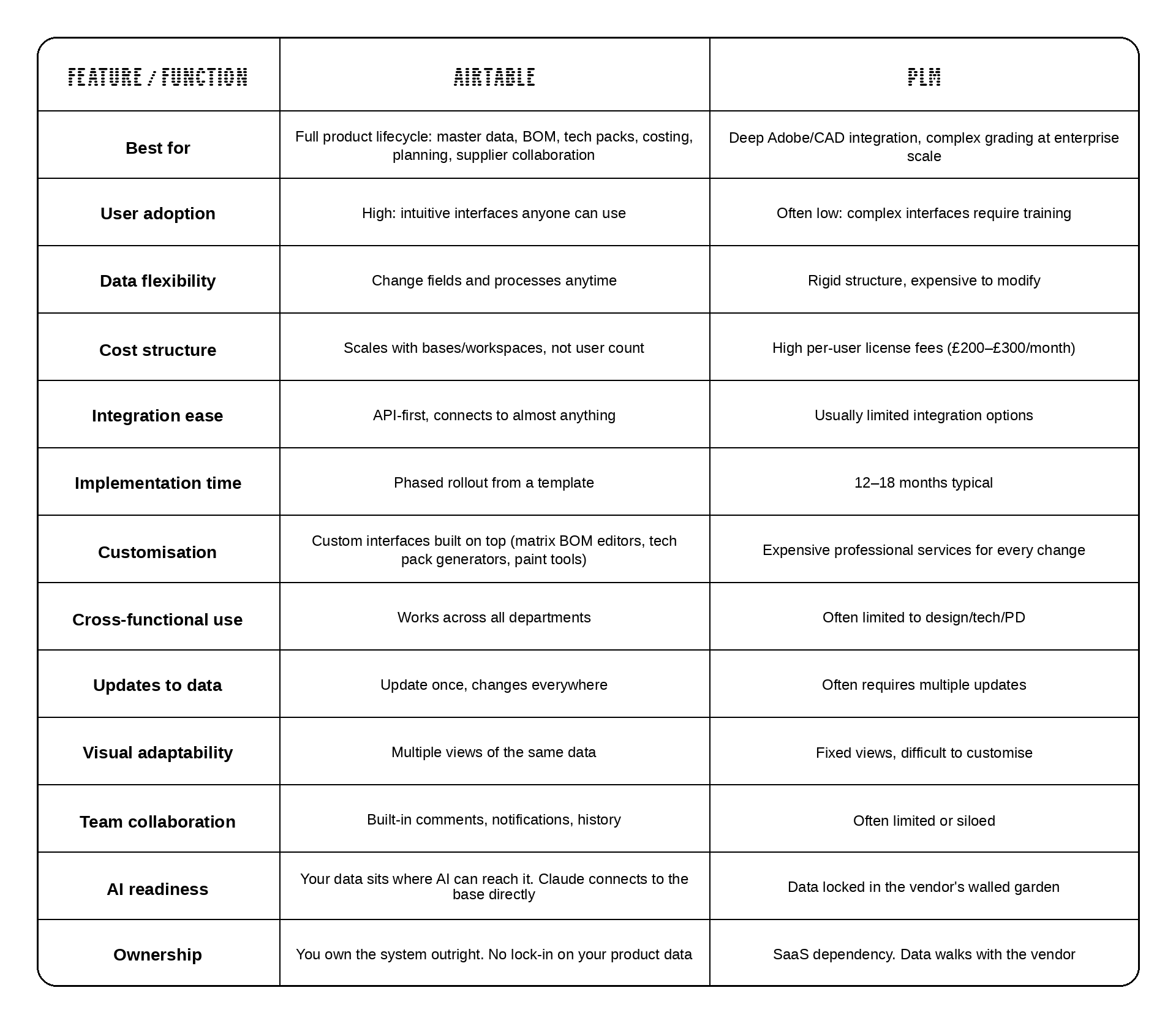
I've watched this pattern repeat too many times over the last 4 years to miss it. A brand buys a PLM, adoption drags, teams keep their spreadsheets going, the licence bill arrives regardless.
Rigid by design. Your processes evolve as you scale. PLMs push back against that. We're sitting in on a brand right now that's spending 4 months migrating from Centric v7 to v13, just to move versions. Before any actual improvement lands.
Your data sits behind a wall. Point Claude at an Airtable base and it navigates the whole thing (supplier performance, purchasing gaps, production delays, answered in seconds). Try the same with most PLMs and you're looking at months of integration work, if it's possible at all. You won't be able to trust your AI any more than you can trust that your Production Schedule is up to date.
The money sits on licences, not outcomes. £200-£300/user/month is normal. One client was spending over £100K yearly on licence fees while still relying on manual processes for most of the work. The spend wasn't coming back as operational value.