MENU

Why the DPP conversation always gets stuck

Someone in the business asks about Digital Product Passports. Usually the sustainability lead, sometimes a buyer, occasionally the founder after an event.

The conversation runs back and forth over a few weekly meetings. What is a DPP, do we need to be on top of this, who owns it here? Then it stops, and it stops in the same place every time. Nobody can say what the brand would actually put in one.

That's where we keep finding these projects. Parked, because the next step needs an answer nobody in the room can give.

What a product passport needs from you

Strip the regulation out for a second. A Digital Product Passport asks 4 questions about a single garment.

Which product is this? What's it made of, and how much of each material? Who made it and where? Sometimes, which purchase order it arrived on?

Then it asks you to answer those 4 questions for every style in the range, on demand.

Most brands we speak to can't. The style has one name in the range plan, another on the tech pack and a third on the order. Composition sits in a costing sheet somebody built way back. The version everyone's working from lives in a random drive folder.

None of that stops you trading. All of it stops you making a verified claim about where a product came from.

We call that the Dark Stack, and it's why the conversation stalls. A Digital Product Passport is a data problem wearing a compliance costume.

The pressure that's already here

Buyers at premium department stores have started asking brands for supply chain credentials at the buying stage. No regulation compels them. Their own customers ask, so they ask you.

That's a commercial conversation happening this season. The brands who can produce a credible answer in the meeting are winning those relationships.
"Brands who can produce credible answers, fast, about where their products come from and how they are made, are winning relationships with buyers and end customers."

Leo Connolly, NOLO

What's coming, and when

France, from October 2026. French Environmental cost display has been live and voluntary since October 2025. From 1 October 2026, two things change. Any third party can calculate and publish a score for your products if you haven't published one. And any brand making a different environmental claim, a carbon figure on a product page for instance, has to display the official environmental cost alongside it.

Scope is apparel above 80% textile content sold in the French market, wherever your brand is based. Footwear, leather goods and accessories sit outside for now.

Basically - from October next year you either publish your own numbers, or you accept whatever numbers someone else publishes about you.

The rest of the EU, from 2028 at the earliest. Under ESPR, every textile product placed on the EU market will need a Digital Product Passport. The delegated act for textiles is expected around 2027 and it can't take effect for at least 18 months after that. Brands planning properly are working to 2028. That work starts now.

Fairly Made tracks this in detail and we take their read on it.

The two things you'll need

One: product data in one place.

One reliable record of every style, variant and SKU that every other system reads from, with the detail that matters to your business attached to it. A Product Master.

A Product Master isn't a design tool or a merch tool, it's the source of truth that connects them all together. Get that right and your team runs those 4 questions as a report.

Two: a traceability and impact partner.

Nobody should half-build this in-house. It needs a verified supplier network, proper LCA methodology, and someone tracking the regulation full time as it moves.

That's why we've partnered with Fairly Made.

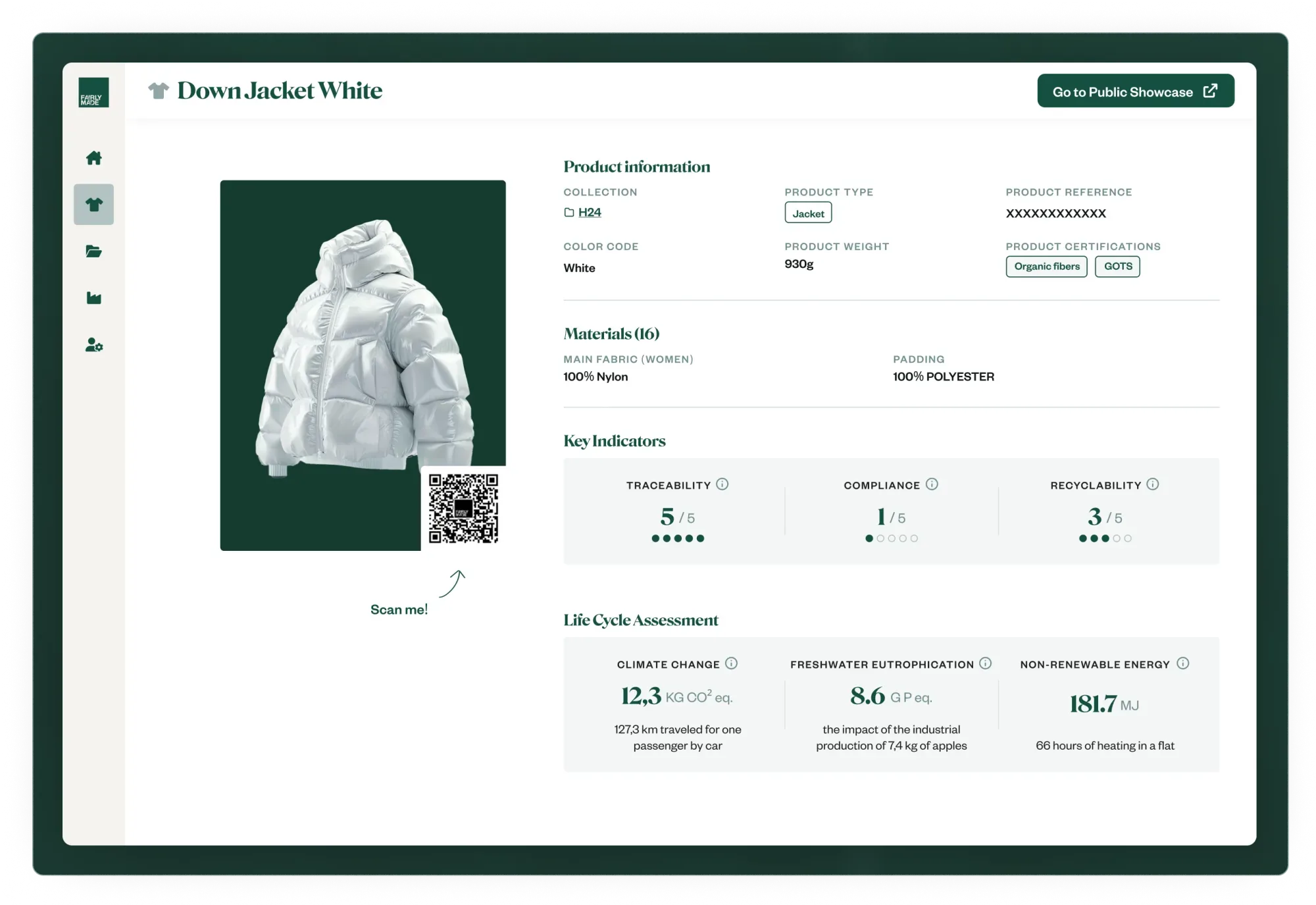
They provide supply chain traceability and impact measurement for over 150 fashion and leather goods brands, with more than 35,000 suppliers onboarded. They calculate the French environmental cost based on the official methodology, produce the Digital Product Passports, and track what applies to a brand and when.

The part our clients care about most is where the study goes once it's finished. Fairly Made send it back into the Product Master, against the product it belongs to. Then the PIM reads it, it shows up on product pages, wholesale puts it in buyer packs, and whoever answers tenders can find it without asking anyone. The brand ends up owning it as product data.

If you buy finished goods and can't see past your direct supplier, Fairly Made can still run the study.

Why 2027 is too late to start

Getting one reliable record of a product, adopted by the people who maintain it, takes months.

Brands who start in 2027 will run an emergency programme. Brands who start now will be publishing while their competitors are still scoping.

And the buyer asking this season isn't waiting for a delegated act.

Where to start

Send us your sheets.

We run a paid Diagnosis before we agree to build anything. 5 workstreams that map what your team actually does, where product data actually lives, and what it would take to hold one reliable record of a product. If DPP is the reason you're looking, it tells you how far off you are before you commit to anything bigger.