

Framework in Action
How leading brands run their product operations

Jaded London
How Jaded London replaced Cin7 & 12+ Excel files and revolutionised their product operations with Airtable.

JADED LONDON
£50M+ revenue
DTC & Wholesale
Replaced Cin7
60+ users
The problem
Jaded London move at the speed of TikTok trends. When Kylie Jenner and Stormi were spotted in their parachute pants, the team had to react that week. Product development and production ran on Excel, email and WhatsApp threads with factories, so every change to a buy ratio or a ship date got lost somewhere between teams.
What we built
One source of truth for product data, from design through to production. SKUs and costings generate automatically, and viral styles can be fast-tracked without stalling the rest of the pipeline.
What changed
Within 3 months, the production team could see every style's status without chasing anyone. When the parachute pants went on to generate £8.5m in sales, the team expedited production without disrupting everything else.

RIXO
How RIXO got their entire team on the same page for product launches

RIXO
Live in 12 weeks
Eliminated 12+ Excel files
£17M Revenue
20+ users
The problem
RIXO grew from £10.3m to £17.4m in a year, opened 3 stores and pushed into wholesale. Behind it, product development was split across tech packs, spreadsheets, WhatsApp, PowerPoint and Dropbox, and the critical path lived in several places at once.
What we built
A digital library for tech packs, BOMs, prints, fabrics and trims, which cut design time from 7 days to 5. Then a launch planner that gave marketing, buying and merchandising one view of the critical path.
What changed
"The adoption of our launch planner has been incremental to keeping communication between teams easy and correct," says Orlagh McCloskey, RIXO's co-founder. The buy team can now view buys in multiple ways, and everyone works from the same information.

Passenger
When you're growing at 345% year over year, spreadsheets just don't cut it anymore.

PASSENGER
£15M funding
£80M+ revenue
700,000+ items a year
345% CAGR
The problem
Passenger's product operations ran on spreadsheets. Every launch meant hours updating multiple files, and every change was checked and double-checked by hand. Expanding into new markets made translations and market-specific content close to impossible. "The current portfolio of sheets simply isn't sustainable," the team told us.
What we built
A Product Master connected to Shopify, then Buying & Costings and Pricebooks on the same foundation. One record per style, supplier negotiations against that record, and pricing for 10+ markets with markdowns that schedule and revert themselves.
What changed
With the foundation in place, Passenger's own team built on it: photography planning, wholesale, range planning, ESG reporting and traceability. "It's all in one place," says Joe Simms at Passenger. "Problems come up, of course, but they are easier to solve when it's all consolidated."
Rat & Boa
How Rat & Boa replaced an 8-year-old production system and the 1,500 spreadsheets built around it.

RAT & BOA
£30M revenue
Replaced Zedonk
Linnworks integrated
200+ countries
The problem
Rat & Boa had run on Zedonk, a wholesale ERP, for 8 years. As a DTC brand at £30m, they'd outgrown it. Developers told them a purchase order integration with Linnworks couldn't be done, and around 1,500 workaround spreadsheets had grown up around the gaps. Every product question went through one person: Sandra López, their production manager.
What we built
An Airtable product master with automated style codes, bills of materials and scenario costings, then purchase orders that flow straight into Linnworks. After that came an inbound shipments and landed cost app feeding Prebuy, the pre-order tool Alister Hewitt built with our support.
What changed
The integration that was declared impossible is live. A flash sale that took 2 days across 5 platforms now compiles from one place. Sandra has since been promoted to Product Director, and the team is building out the full product lifecycle on the same foundation.
Sofa Club
How Sofa Club got its team's hours back by building around their ERP instead of replacing it.

SOFA CLUB
£44M revenue
Built around their ERP
Record Black Friday
8 tools adopted
The problem
Sofa Club sells hundreds of modular variants, each made of 3 or 4 parts, each part with its own supplier and lead time. Their custom ERP, Mehmbrane, handled allocation and deliveries well. Purchasing, outlet pricing and payment reconciliation lived in spreadsheets, and a 3-person dev team couldn't build everything the business was asking for.
What we built
A Product Master, then a Purchasing app, outlet and bulk pricing tools, container tracking, payment linking and inventory valuation, all in Airtable and connected to Mehmbrane. Purchase orders moved out of the ERP. Only inbound shipments went back in.
What changed
The team got their hours back. Sofa Club closed 2025 at £44m, a record year with a record Black Friday on top. As the ERP moves to Microsoft Business Central, the apps get pointed at the new system and the team keeps the interfaces they already know.
Brindisa
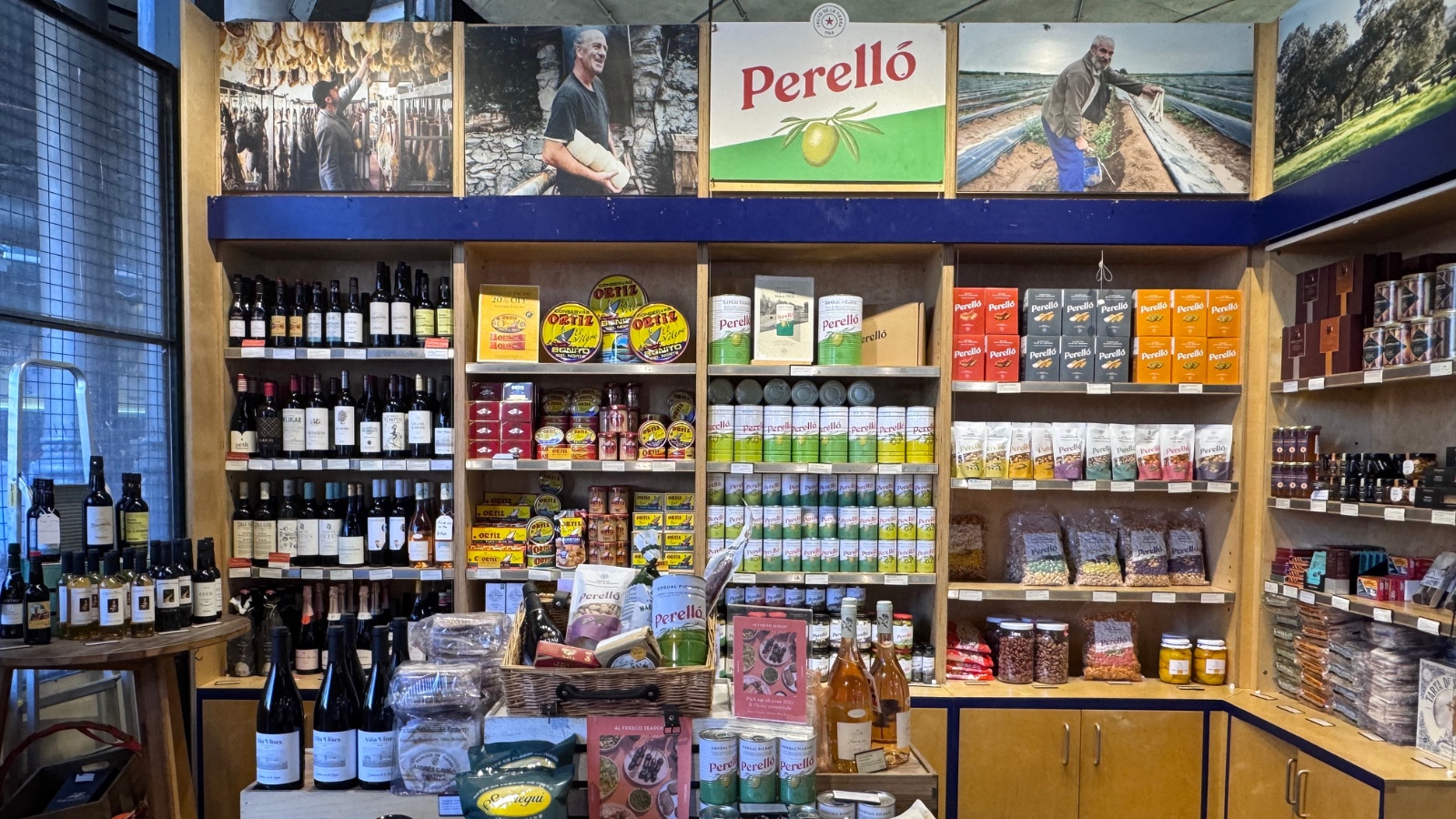
How Brindisa turned 30 years of product knowledge into one source of truth their team named themselves.
BRINDISA
700+ SKUs
Replaced 10+ spreadsheets
65 users in a week
Live June 2026
The problem
Brindisa sells 700+ SKUs by the each, the kilo, the case and the pallet. Their ERP, Winman, held the transactional core. Specs sat in Word documents, descriptions and NPD in 10+ spreadsheets, images in Dropbox and supplier stories in email. Two agencies had read it as a PIM project.
What we built
A product master in Airtable, built sprint by sprint with buying, technical, supply chain and marketing in the room. Product families down to variants, SKUs that generate themselves with duplicate checks, allergen validation before anything reaches Winman, and an export that keeps the ERP fed.
What changed
Phase one went live in June 2026, and within weeks 65 people were using it in a single week. Brindisa named it themselves: La Biblia Gastronomica. Pricing and costing comes next, on the same foundation.
Goose & Gander
How Goose & Gander gave its creative team a system and got 6 weeks a year back.

GOOSE & GANDER
60x faster searches
6 weeks saved a year
170,000+ orders a year
20-30% time back
The problem
Goose & Gander process 170,000+ orders a year with a lean team. Their creative department ran on personal spreadsheets with no shared library of materials or designs. "Our marketing and creative department is like a warehouse with no stock system and no warehouse management system," says co-founder Olly White.
What we built
A materials library in Airtable holding every swatch, design and spec, with colours, costs, suppliers and approval status on each record. Automated workflows replaced the presentation and approval cycles that took 2 weeks, 6 times a year.
What changed
Finding a historical design went from 30 minutes to 30 seconds. "Airtable gives us at least 20-30% of our time back," says Leonie, their operations manager. The team now has the visibility to hire a dedicated product developer and bring on US and EU suppliers.
NOLO