MENU

Antifragile systems: why flexible platforms make organisations stronger

The most resilient organisations may not be those that resist change - but those that benefit from it.

Stability is not always strength

For a long time organisations were designed around stability. Predictable processes. Standardised workflows. Carefully controlled systems.

This made sense in environments where change was relatively slow, and efficiency was the primary goal. Stability reduced errors and allowed organisations to scale operations reliably.

But the modern technological landscape behaves differently. Digital tools evolve rapidly. AI capabilities improve continuously. Markets shift faster than many organisations can adapt.

In this environment stability alone is not necessarily strength. Sometimes it is the opposite.

The idea of antifragility

The mathematician and philosopher Nassim Nicholas Taleb introduced a concept that helps explain this distinction - antifragility.

In Antifragile: Things That Gain from Disorder, Taleb argues that systems can respond to volatility in three different ways.

  • Some systems are fragile. They break when stressed.
  • Some systems are robust. They resist shocks but remain fundamentally unchanged.
  • And some systems are antifragile. They improve when exposed to volatility, uncertainty, and variation.

Antifragile systems learn and adapt through interaction with changing environments.

Biological evolution is one example. Small variations and pressures produce adaptation over time, making the system stronger. Taleb argues that many modern institutions attempt to eliminate variability entirely, which can unintentionally make them fragile. The same dynamic can appear in organisational systems.
"The organisation does not simply survive change. It improves because it is exposed to change."

Gavin Fudge, Solutions Consultant

When process becomes a constraint

Many traditional enterprise systems attempt to enforce perfect process control. Once a workflow is defined it becomes difficult to modify. Changing the structure often requires configuration projects, specialised expertise, and long approval cycles.

This rigidity can make organisations slower to adapt.

When new opportunities or unexpected events appear, the system itself becomes an obstacle to change. Teams resort to workarounds, parallel spreadsheets, or manual coordination. Over time the gap between the formal process and the real work widens.

In Taleb's terms, the system has become fragile.

Systems that evolve with the work

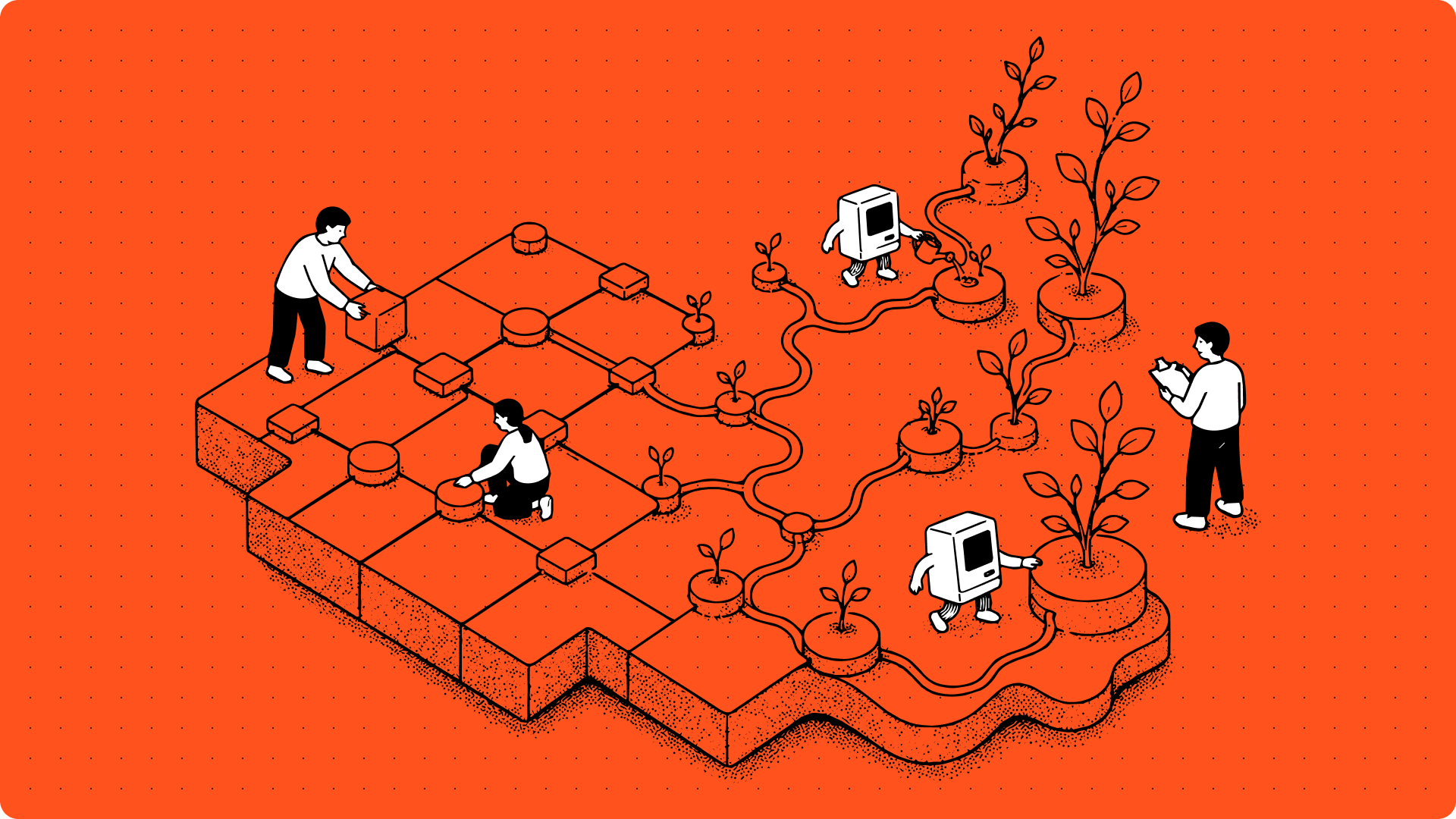
Flexible operational platforms introduce a different dynamic. Systems like Airtable are designed to evolve continuously. Data structures can be extended. Automations can be modified. Interfaces can be redesigned as processes mature.

Instead of forcing organisations to freeze their processes in (expensive) software, the system adapts alongside the organisation.

This creates a feedback loop. As teams encounter new situations they can refine the system directly. Those refinements then shape how work happens in the future.

The system becomes a living model of the organisation rather than a static blueprint.

This adaptability begins to resemble Taleb's idea of antifragility. The organisation does not simply survive change. It improves because it is exposed to change.

Human judgement inside the system

This philosophy shapes how we should think about design and delivery of systems.

Rather than building rigid solutions that remain unchanged after implementation, the goal is to create operational systems that users can refine themselves.

In practice this means designing systems that are transparent, understandable, and adaptable. Users can see how the system works, adjust workflows, and extend the model as the organisation learns more about its own processes.

This approach shifts the role of people within the organisation. Instead of simply operating the system, they become participants in designing and evolving it.

That shift matters for two reasons:

  • First, it allows the system to improve continuously in response to real operational experience.
  • Second, it encourages people to engage in the type of thinking that will become increasingly valuable in an AI-driven environment.

Judgement.

Kahneman, cognitive bandwidth, and better decisions

The psychologist Daniel Kahneman distinguishes between two modes of thinking:

  • System 1 thinking is fast, intuitive, and automatic. It allows humans to react quickly but can lead to cognitive biases.
  • System 2 thinking is slower, analytical, and deliberate. It requires more mental effort but supports careful reasoning and judgement.

Kahneman explores these dynamics extensively in Thinking, Fast and Slow (2011).

When people are overwhelmed with repetitive tasks and operational noise, they tend to rely heavily on System 1 thinking. Decisions become reactions rather than reflections.

But when systems remove unnecessary friction - automating routine work and clarifying processes - people have more cognitive bandwidth available for System 2 thinking. In other words, well-designed systems do not only improve efficiency. They create space for better judgement.

Organisations that learn

Taken together, these ideas suggest a different vision of organisational design.

Instead of attempting to build perfectly optimised processes that remain unchanged, organisations might focus on building systems that can evolve continuously.

Flexible operational platforms support that approach. Human judgement guides the evolution of the system. AI agents and automations execute increasing portions of the operational workload.

Over time the organisation becomes more capable, not because it eliminated uncertainty, but because it learned how to adapt within it.

That is the essence of antifragility.

References

Taleb, N. N. (2012). Antifragile: Things That Gain from Disorder. Penguin.

Kahneman, D. (2011). Thinking, Fast and Slow. Allen Lane.

Brynjolfsson, E. and McAfee, A. (2014). The Second Machine Age. W. W. Norton & Company.

Yoo, Y., Henfridsson, O. and Lyytinen, K. (2010). Research Commentary - The New Organising Logic of Digital Innovation. Information Systems Research, 21(4), 724-735.